

1000+
Successful Projects
 Loading…
Connect devices, manage information and improve everyday operations with custom IoT development services from Elexoft. Have an IoT idea or an existing system that needs improvement? Share your requirements with our team and explore a practical development approach.
Your devices may already be collecting useful information. The challenge is making that information easy to access and use.
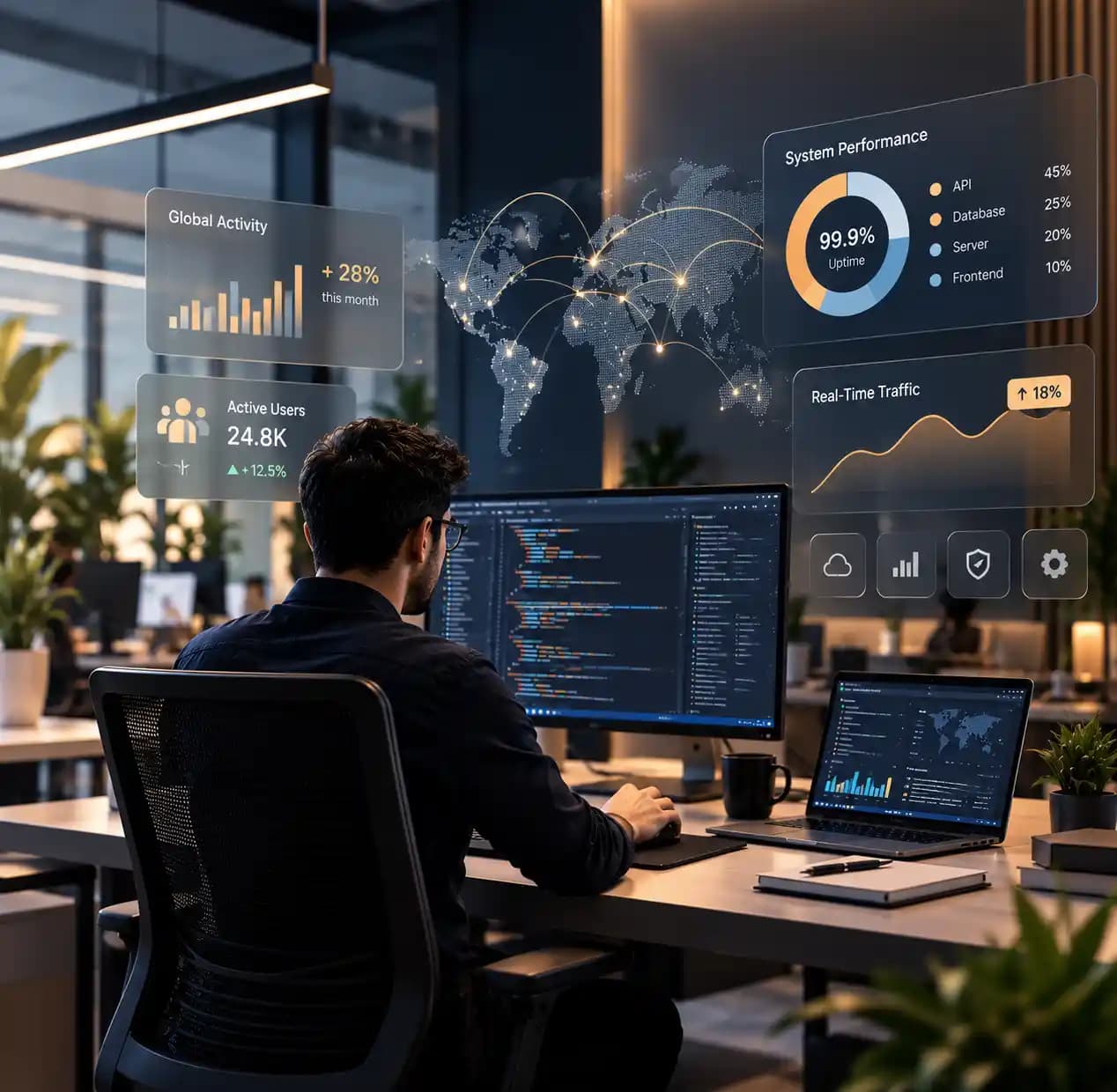
Elexoft helps businesses explore custom IoT solutions that connect device data with the software people use every day. This can include monitoring dashboards, mobile applications, cloud services, automated alerts and integrations with current systems.
Our approach to Internet of Things development services starts with understanding what your business needs to achieve. We look at the available devices, the information they produce and the actions users need to take.
For some businesses, that means creating a simple dashboard to monitor equipment. Others may need a connected application that supports customers, technicians or operations teams through different locations.
The right solution should make important information easier to find and help people respond when something needs attention.
What your IoT solution can help you do:
Explore IoT software development services created for businesses creating connected products or improving existing systems.
Before development begins, you need to know what the solution should do and how its different parts will work together.
Our IoT consulting services focus on understanding your business goals, available hardware, users, and technical requirements.
We can help define the application scope, review integration needs and evaluate suitable software architecture options. This planning stage also helps identify possible challenges related to connectivity, data storage, and device compatibility.
The result is a clearer view of what to build first and what to add later.
Key areas: Requirements analysis, IoT architecture design, technology selection, feasibility assessment and development planning.
A connected solution needs careful planning because software, devices and communication systems must work together.
We begin via understanding your business goals and the problem you want to solve. We review the intended users, available devices, existing applications and important features. This helps establish the project scope plus identify technical dependencies early. Outcome: A clear understanding of the required solution.
Next, we review how the application should receive, process and display device information. We consider connectivity, backend services, databases, cloud infrastructure and integration requirements. When existing hardware is involved, available documentation and supported interfaces are important parts of this review. Outcome: A proposed technical approach and development plan.
We design application screens around the information users need most. This may include device lists, monitoring dashboards, alerts, reports and administrative controls. The goal is to make connected information easy to understand without introducing unnecessary complexity. Outcome: Application designs and user workflows.
The development stage covers the agreed software features, backend services, APIs and user interfaces. Device integrations are implemented according to the available technical interfaces and project requirements. Work can be divided into smaller stages so features can be reviewed during development. Outcome: Functional software components and connected workflows.
We test the application against its agreed requirements. Testing can include user functions, API behavior, data correctness, integration errors and connection handling. Security and performance checks are planned according to the system architecture and planned use. Outcome: Tested software prepared for deployment.
Once the application is ready, deployment activities may include cloud configuration, environment setup and operational checks. Following deployment, ongoing support may include resolving technical issues, maintaining software updates, tracking system performance, and implementing additional enhancements. The maintenance scope is agreed based on your requirements. Outcome: A deployed solution with defined support responsibilities.
We commence by understanding the problem your business needs to solve. This helps define useful features and avoid building unnecessary functionality.
Connected systems usually need interfaces for different users. Our application development capabilities support web and mobile experiences for customers, employees and administrators.
IoT software may require APIs, databases, event processing and secure hosting. Our cloud and backend capabilities provide a foundation for building these application components.
Hardware interoperability and integration requirements can affect project scope. We review these requirements so the development approach is based using available information.
Testing helps identify software and integration problems before deployment. We also discuss maintenance needs so responsibilities remain clear after launch.
The cost of developing IoT software varies based on the required functionality, system integrations, and overall technical complexity.
A simple monitoring dashboard that receives information via an existing API may require less development than a platform that connects several device types across multiple locations.
The number of users, data volume, cloud infrastructure and security requirements can also affect the project scope.
Every IoT project starts with a problem worth solving. Here are some connected software solutions firms can consider.
Firms approach IoT development at different stages. Your project may involve a new idea, an existing application or a connected system that needs improvement.
We help define the requirements and development scope before building the agreed application.
An MVP may focus on device connectivity, a basic dashboard, alerts and the most important user workflows.
An assessment helps determine which components can be reused and what needs to change.
Project responsibilities, development procedures and technical requirements are clearly defined and approved before the project starts.









Modernize education systems with AI powered Learning Management Systems (LMS), customized e-learning platforms, mobile learning apps, school and campus management software, virtual classrooms, communication and collaboration tools and more.
Have a connected product idea or an existing IoT system that needs better software?