

1000+
Successful Projects

 Loading…

Your ecommerce store should support the way your business sells and manages orders. Elexoft provides Magento development services for businesses planning a new online store, improving an existing Magento website or connecting their store with other business software.


agento ecommerce development gives businesses control over their catalog, shopping experience and the systems behind each sale. A retailer may need product filters and clear delivery options. A distributor may need different prices for business customers. A company with several warehouses may need its online orders to update stock records in another system.
These needs cannot always be solved by installing a theme or adding another extension. Custom Magento development starts with understanding how the business operates and deciding which parts of the platform need to change.
Elexoft can help plan a new Magento 2 website or assess an existing store to improve functionality. We review customer journeys, product information, connected systems, and ongoing maintenance requirements before recommending an approach. For projects involving several sales channels or a larger software platform, our custom ecommerce software development services give additional context.




A Magento store needs more than attractive product pages. Customers must be able to find products, compare options, see accurate availability and place orders with confidence. Staff need a practical way to manage the same information after launch.
Magento website development may include category structures, product attributes, configurable products, search and filtering, customer accounts and order workflows. We plan in what way these elements fit together before building the storefront.
For example, a business selling equipment with many sizes and specifications needs a different catalog structure from a fashion retailer selling a small collection.
A store theme controls much of what shoppers see and how they move between pages. Magento theme development can create a distinct storefront while keeping product information and buying actions easy to understand.
We consider navigation, mobile layouts, product galleries, category pages and the cart. Theme customization may be suitable when an existing design already meets most requirements.
A more extensive build may be needed when the current theme limits important features or creates maintenance problems.
Extensions add features to Magento, but installing several tools that solve related problems can make a store harder to maintain.
Custom Magento extension development is useful when a business has a requirement that standard extensions cannot meet reliably.
A custom module might handle special product rules, customer approval steps, order processing or information shared with another system. Before recommending development, we review whether a supported existing extension can do the job. We also consider how the feature will behave after Magento updates.
Checkout is where product selection becomes an order. If the process asks for excessive details or does not correspond to how a business sells, customers may struggle to complete their purchase.
Magento checkout customization can involve field requirements, delivery options, customer account behavior and payment steps. A business selling to companies may need purchase references or different billing information. A retailer may need a simpler process for customers ordering from a phone.
We review the entire order journey instead than change the appearance of a single screen. Cart totals, taxes, shipping charges, payment responses and order confirmation must remain consistent. Any changes should be tested using the store’s payment and delivery methods.
Moving an ecommerce store to Magento involves products, customers, order records and the details that keep daily operations running. It can also involve images, URLs, integrations, and custom features that cannot be migrated via a simple data import.
A migration plan should identify what must be transferred, what needs to be rebuilt and how the new store will be checked before launch. Important page URLs may need redirects so visitors and search engines can find the correct content. Product counts and order records should be checked against the source system.
Magento version upgrades need a similar level of care. Themes, extensions, hosting requirements and custom modules may behave differently after an update. We recommend compatibility tests, backups, and testing in a staging environment before making changes to the live store. No migration should promise that every issue or ranking change can be prevented.
A Magento store may feel slow because of its hosting setup, theme, extensions, database queries or large product images. Magento speed optimization begins by identifying the pages and actions that need attention. Changes should be measured rather than assuming a single caching setting will solve every problem.
Depending on the store, work may involve caching, image delivery, frontend scripts, database activity and server configuration. Security reviews can cover user access, software updates, extension sources, backups and the handling of sensitive information.
Performance and security need persistent attention. A change that works well on a test store should still be checked against real catalog and checkout requirements before it reaches customers.
Magento maintenance services help businesses manage updates, fix technical issues and improve a store after launch. This work may include reviewing security patches, checking extension compatibility, investigating errors and planning new features.
A useful support arrangement defines who is responsible for hosting, backups, code changes and emergency problems. It should also explain how changes are approved and tested. For an existing store, an initial technical review can help identify the most urgent issues before regular maintenance begins.
Need help with your current store? Discuss your Magento requirements with Elexoft.
A Magento website often needs to work with software used outside the storefront. Inventory systems, accounting tools, customer databases and delivery providers may all need information from an order. Magento API integration can reduce repeated data entry when those systems exchange information correctly.
Magento ERP integration connects ecommerce activity with the systems a business uses to manage stock, purchasing, sales and fulfillment. The exact data flow depends on the ERP system and how the company operates.
Consider a distributor that manages inventory in an ERP system. Magento displays available products while the ERP remains responsible for stock records. When a customer places an order, the required details move to the ERP for processing. Updated stock information then returns to the storefront.
Businesses planning to expand their business platform can also explore our ERP development services.
Magento payment gateway integration connects the checkout process to a payment provider supported in the business’s market. The work may include payment configuration, customer redirection, transaction responses and order status updates.
Payment methods depend on the provider, country and merchant account. We review those conditions before selecting an approach. Testing should cover successful payments as well as declined transactions, interrupted sessions and refunds where supported.
A payment is not complete simply because the customer sees a confirmation screen. The order record and payment response must agree so staff can process purchases correctly.
Magento can exchange information with CRM platforms, shipping providers, product information systems and other applications through supported interfaces. REST APIs and GraphQL are useful in different situations, while some connections may require a separate integration service.
A shipping connection might send order details to a fulfillment provider and receive tracking information in return. A CRM connection might share customer records after consent has been obtained and data administration requirements have been reviewed.
We define which events trigger updates, what happens when an API is unavailable and how errors will be recorded. These details matter as much as establishing the initial connection.
A clear development process helps you understand what is being built, how progress will be reviewed and what needs approval before launch. The stages below outline a practical approach to planning Magento work. The exact activities depend on the agreed project scope.
We begin by discussing your products, customers, business goals and current systems. For an existing store, the review may include its Magento version, extensions, theme, hosting and integrations. We identify the main problems and agree on which requirements matter most.
The next stage defines important pages, catalog structure, custom features and system connections. We consider whether an existing extension is suitable or whether a custom module is justified. Integration planning also identifies where data are stored and which system should control updates.
Development adheres the agreed scope. Work may include storefront templates, modules, checkout changes or connections to external software. Features should be reviewed as they are completed so issues can be identified before they affect the rest of the project.
Testing should cover product selection, cart totals, checkout, payments, shipping and order processing as applicable. For migrations or upgrades, it should also include data checks and compatibility with extensions. Before launch, responsibilities for backups, deployment and post-launch support should be clear.

Some businesses need more complex commerce features than a standard retail storefront. The right approach depends on customer types, how products are sold and which Magento product or edition is in use.











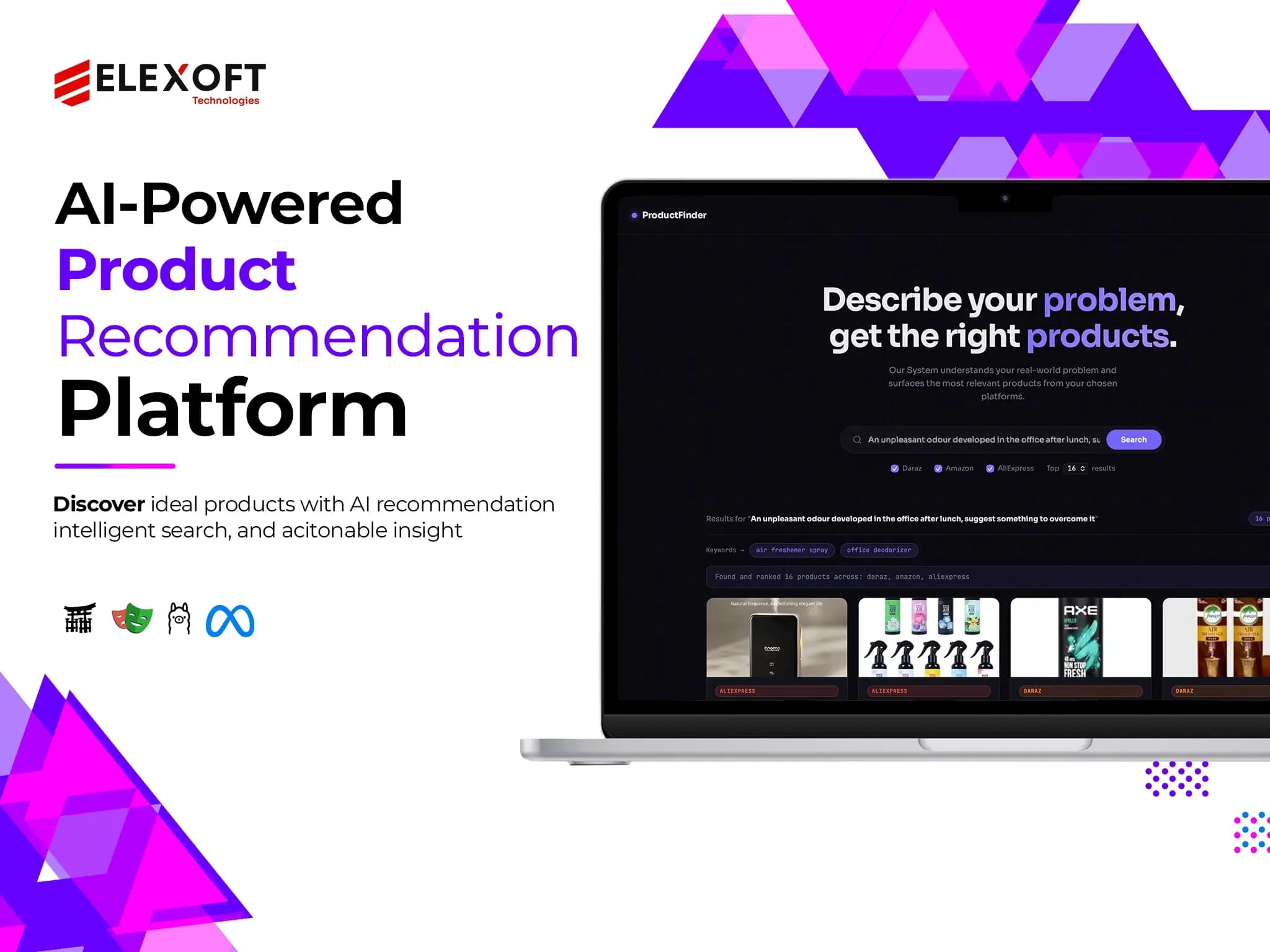
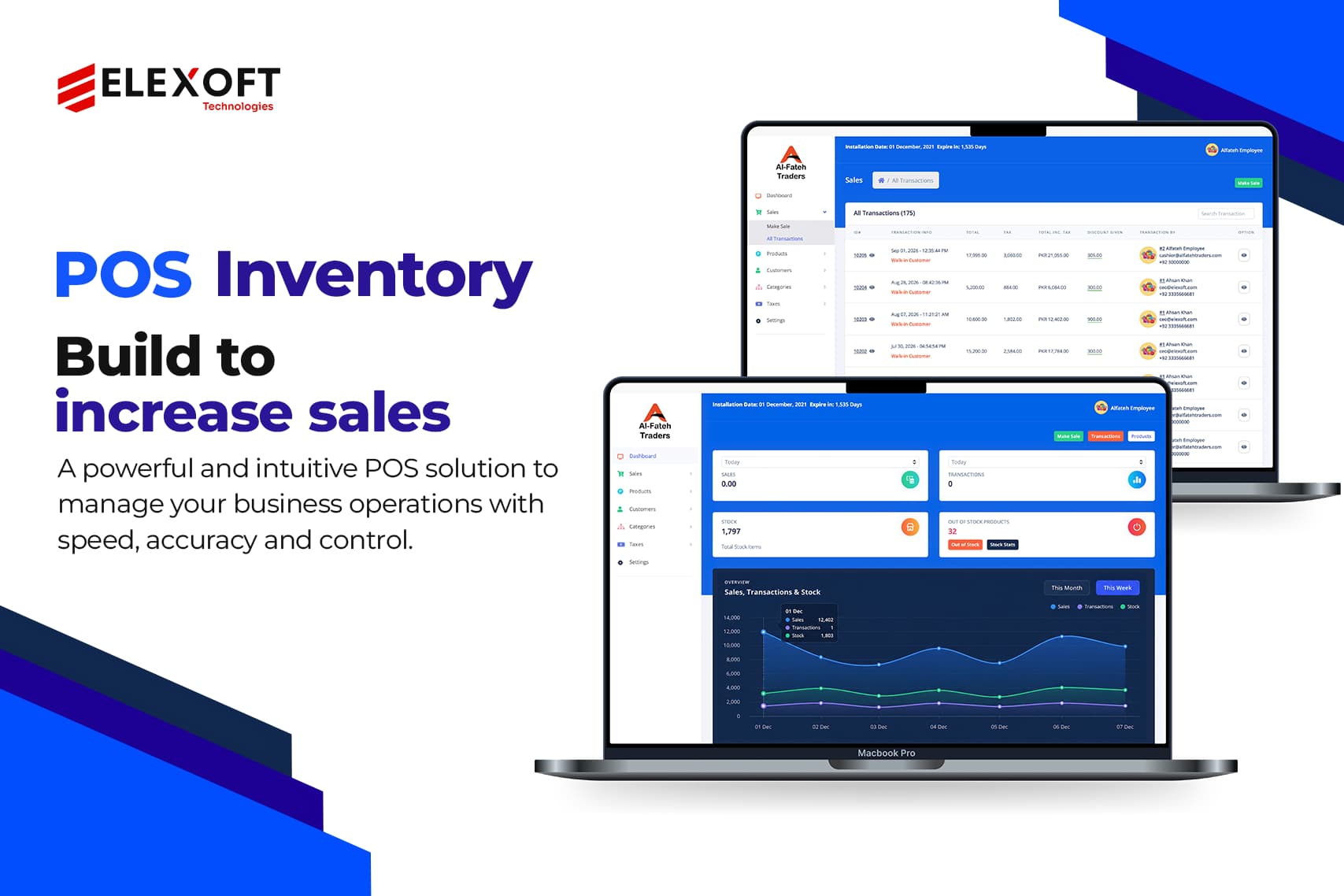
Discover our portfolio of digital products and solutions, showcasing how we turn business requirements into practical, scalable and user focused applications.
Magento development services can include store setup, theme customization, extension development, checkout improvements, business integrations, migration, upgrades and maintenance. The right services depend on your store’s present setup and the features your business needs.

Tell Elexoft what you want to build or improve. You may be planning a new Magento 2 store, an extension, an ERP integration or a migration from another platform.